
AI Marketing Automation Consultant
Marketing automation that connects activity to outcomes.
I build AI marketing automation workflows around lead generation, audience management, retargeting, CRM handoffs, attribution, and reporting so campaign activity becomes usable business context.
Marketing automation is the connective layer.
Every platform produces data, but data alone is not a system. Automation connects the signals around acquisition so campaign activity can become usable lead context, cleaner reporting, faster follow-through, and better decisions.
It should not choose the marketing strategy for you. It should make the strategy easier to execute, measure, and improve.
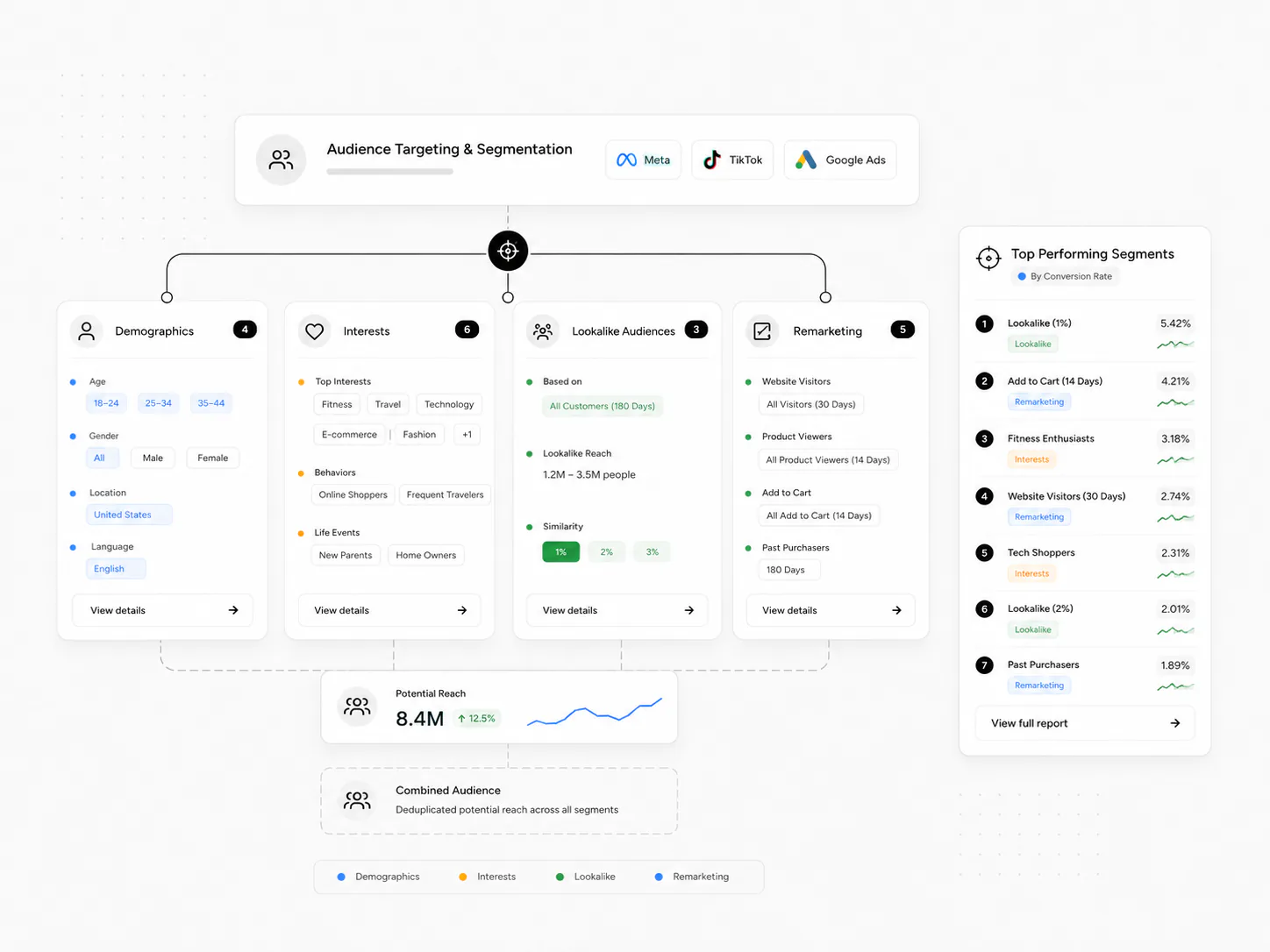
Audience
Campaigns work better when targeting is based on useful segments instead of disconnected lists. Customer data, intent, source, and exclusions can stay synchronized as audiences change.
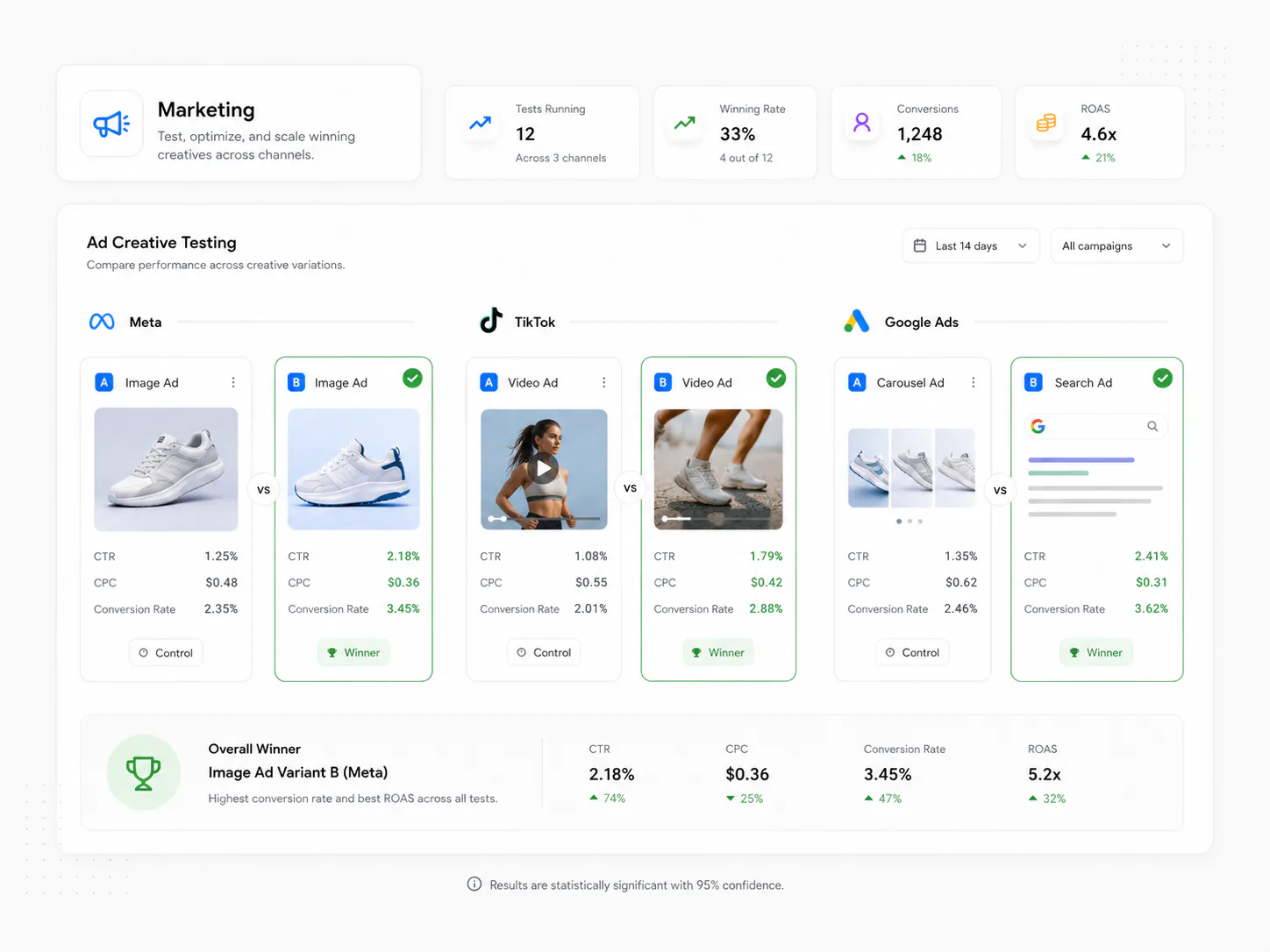
Creative testing
Testing should produce a record of what was shown, to whom, and what happened next. That makes creative learning reusable instead of trapped inside an ad account.
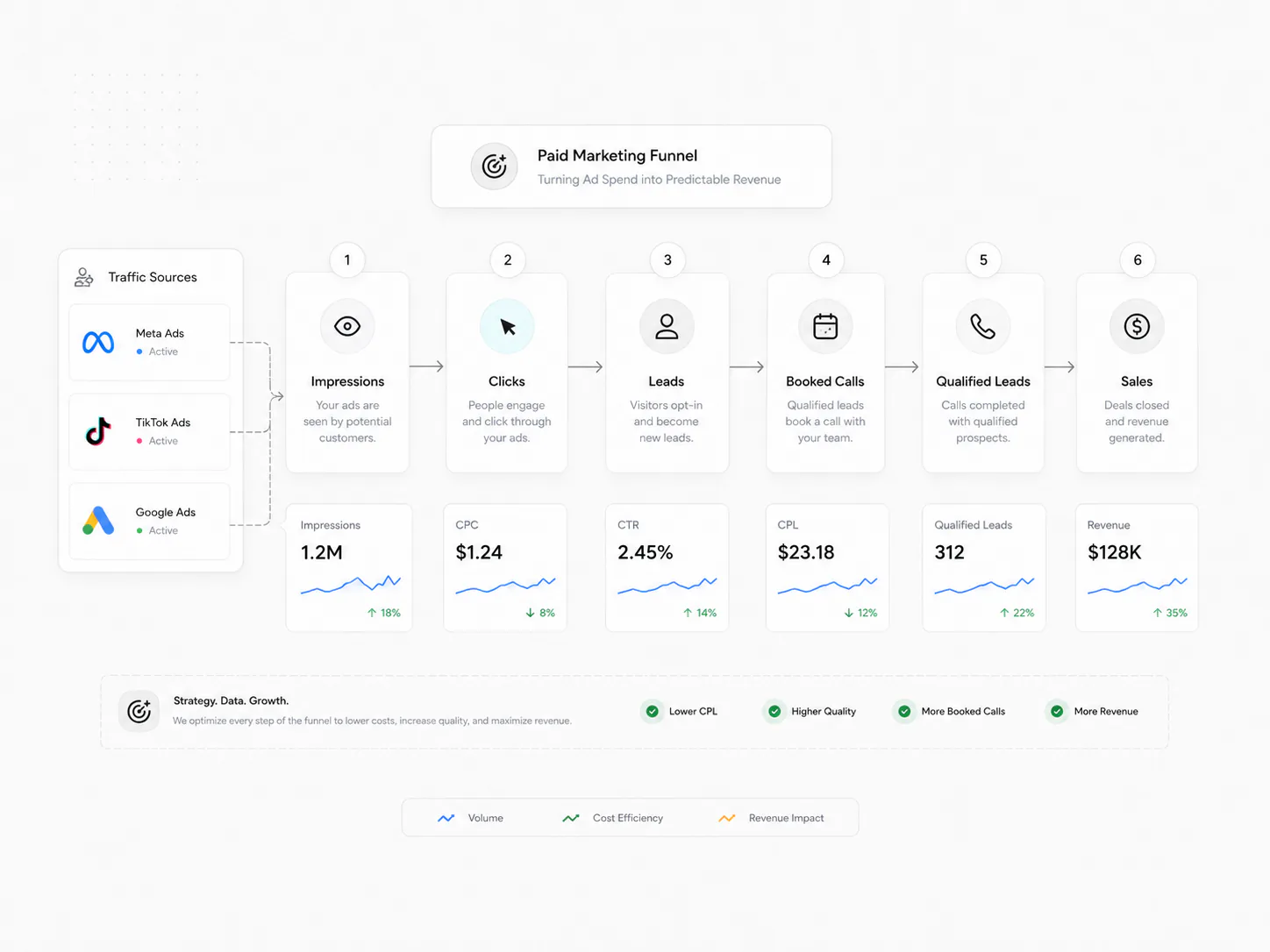
Paid funnel
The path from ad to landing page to lead should be visible as one journey. When the handoffs are connected, weak points become easier to find and fix.
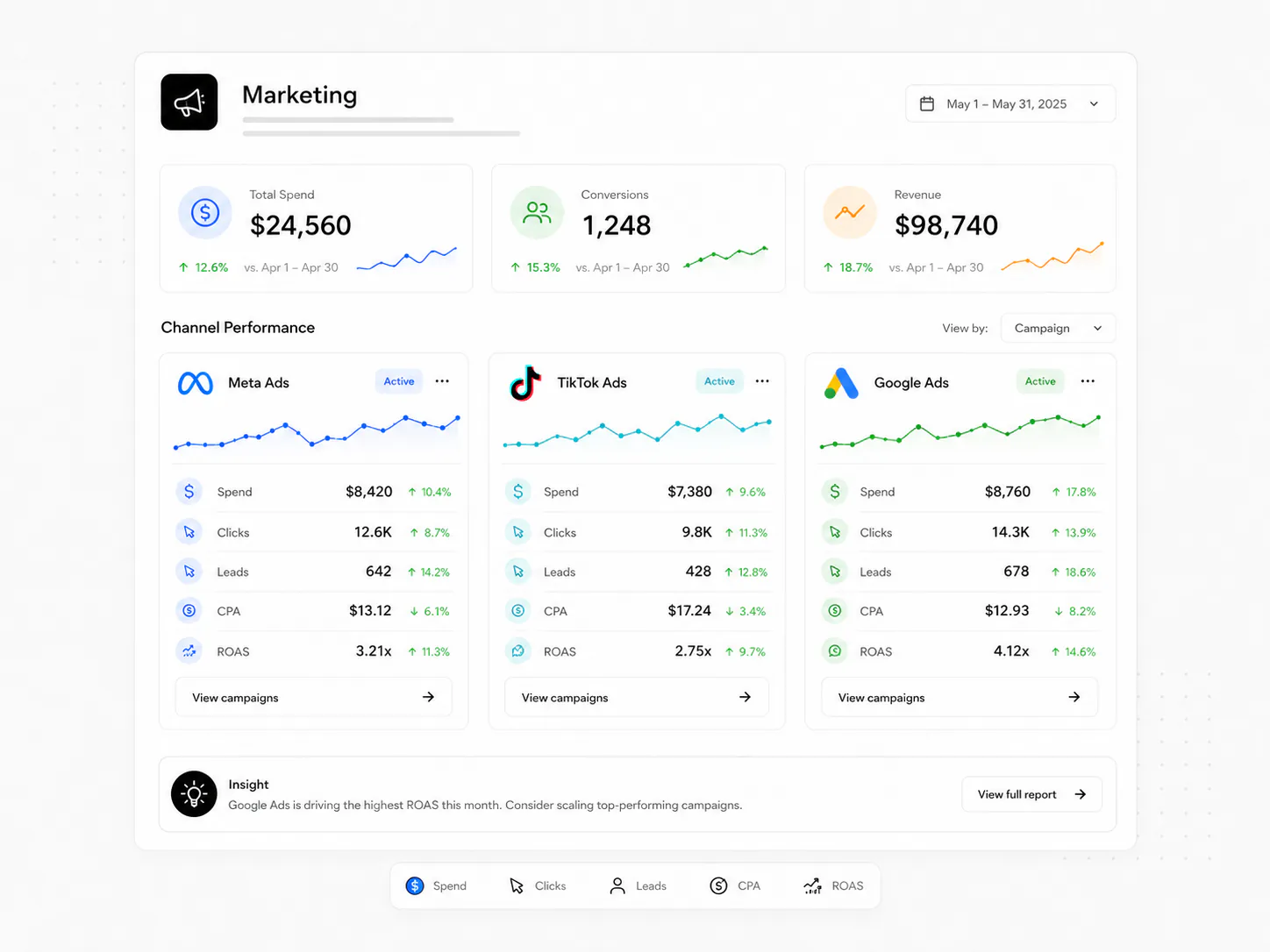
Channel performance
Spend, leads, conversion, and revenue should be comparable across channels without rebuilding the same report by hand every week.
Lead generation
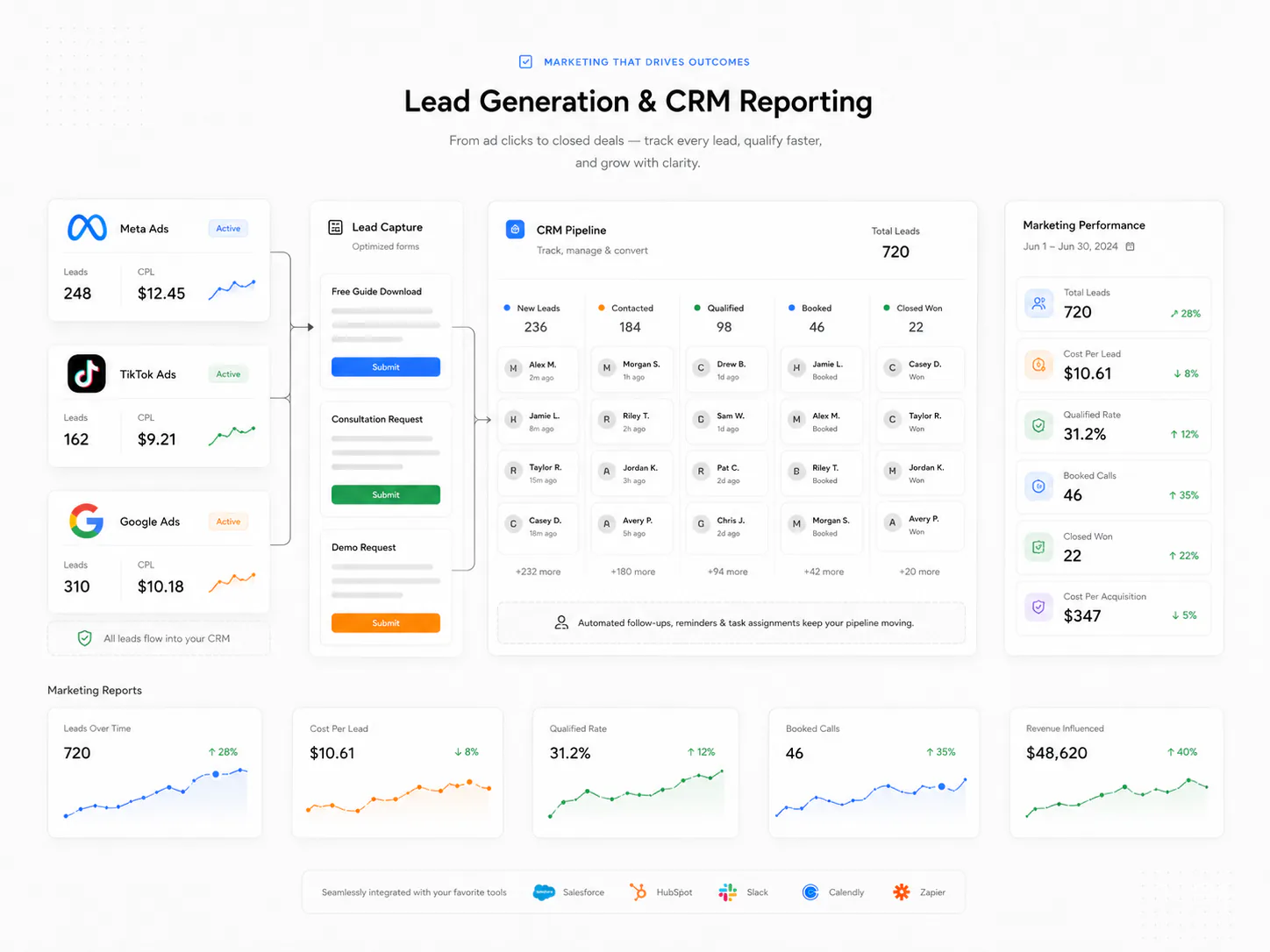
A marketing lead should arrive with the campaign, ad, source, form context, and downstream status attached. That is what lets marketing and sales look at the same outcome.
Retargeting
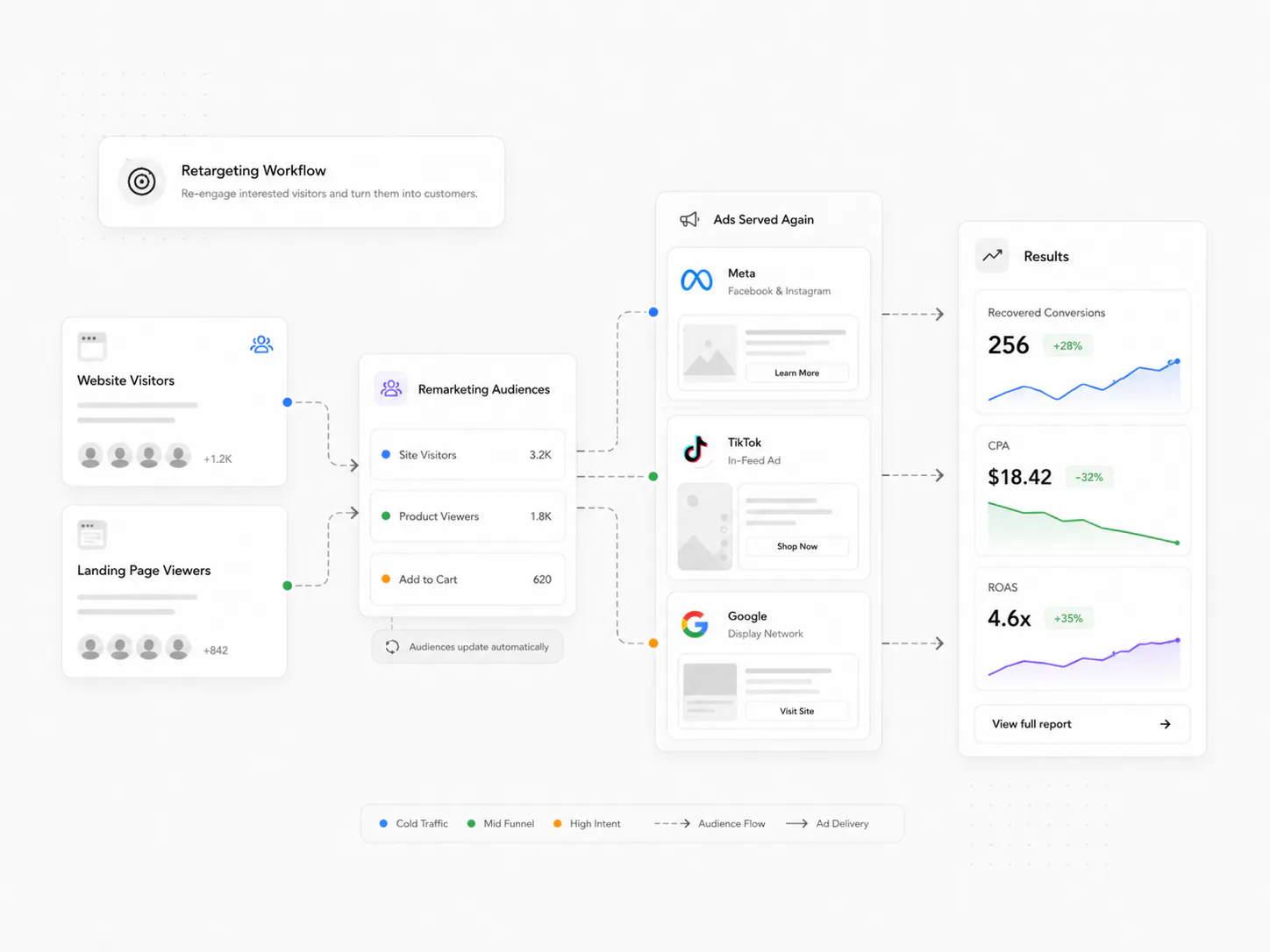
Not every visitor is ready on the first touch. Retargeting works better when audience entry and exit are tied to real behavior instead of static lists.
Attribution
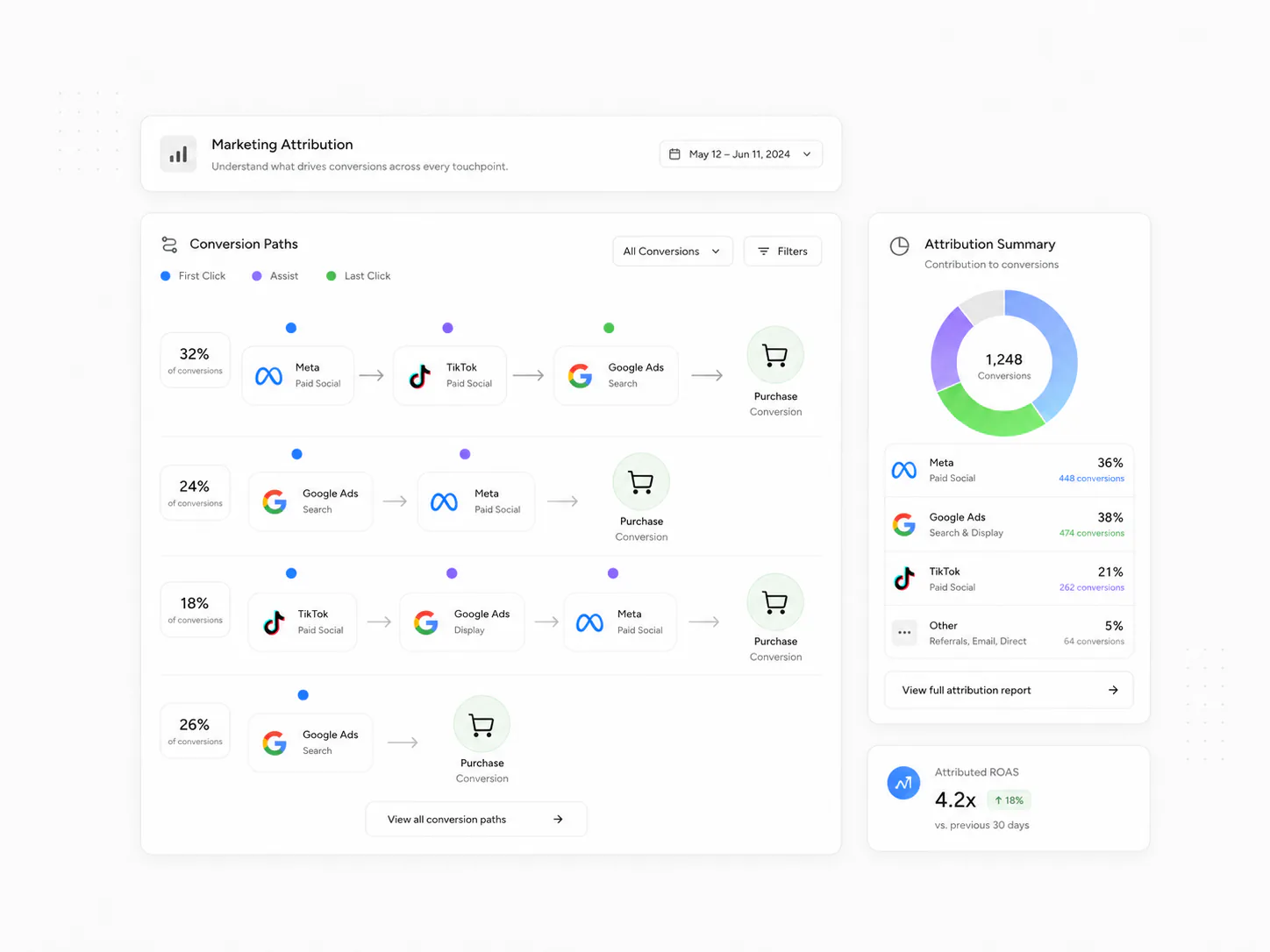
The system should preserve enough source data to explain where meaningful outcomes came from. Attribution will never be perfect, but it should be better than guessing from the last click.
Budget allocation
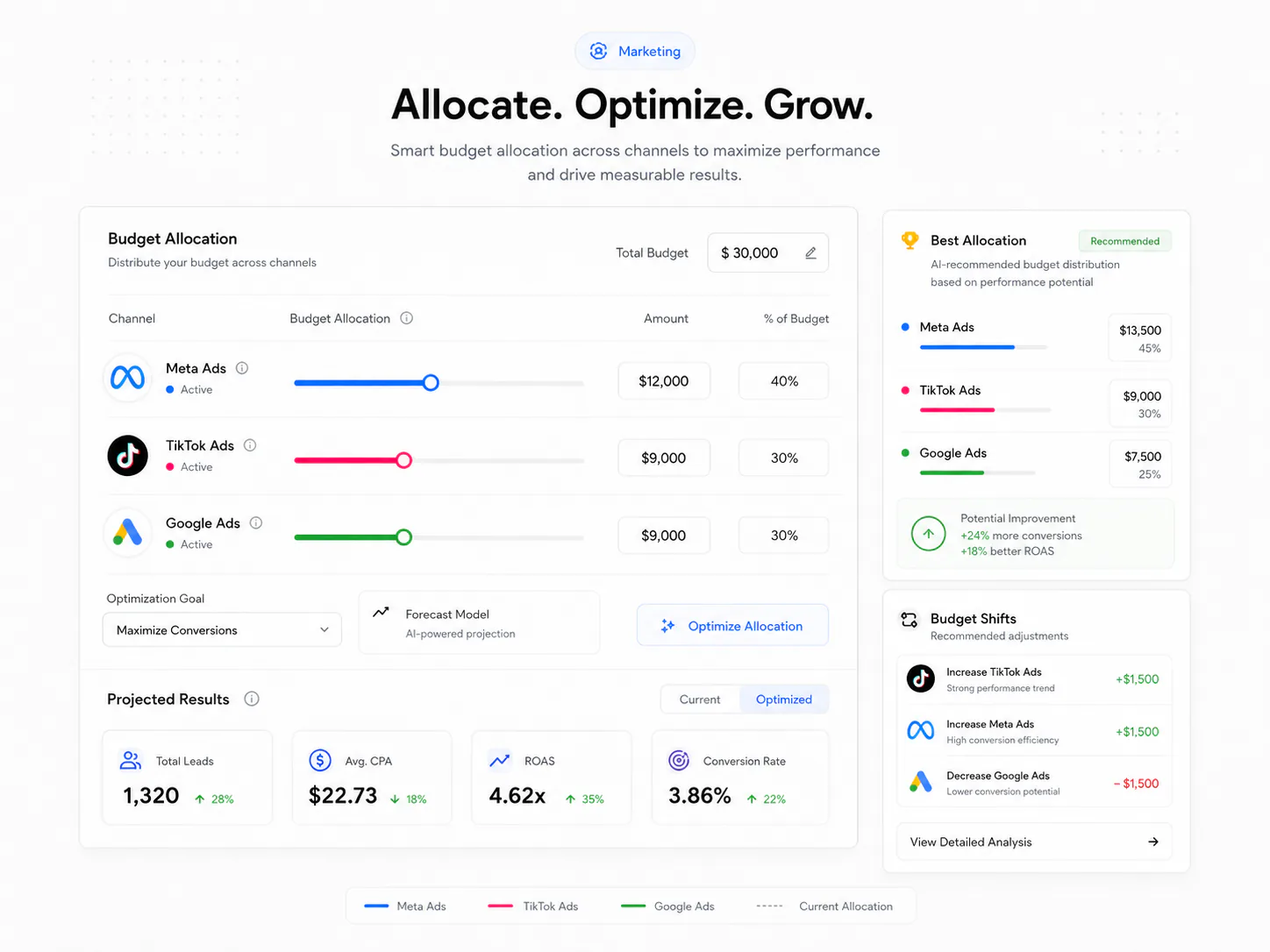
Budget decisions become more useful when spend is viewed beside quality, pipeline, and return. The goal is not automatic spending; it is faster evidence for where the next dollar should go.
One operating view
A good overview compresses the noise. It should show the few signals that explain what is moving, what is expensive, and what deserves a closer look.
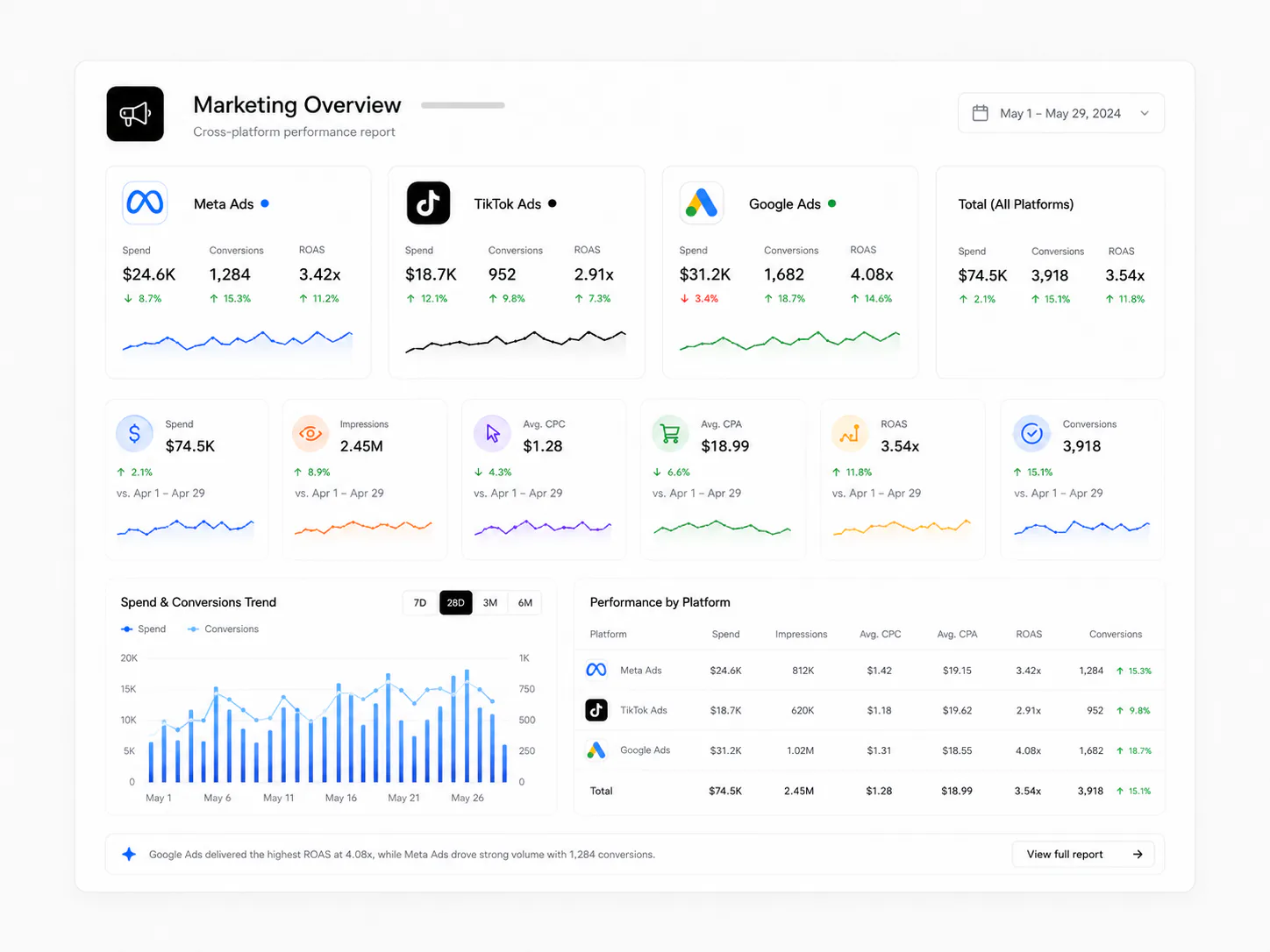
Learning loop
Reporting is useful when it changes the next decision. The final layer is turning campaign data into a short set of observations, experiments, and actions for the next cycle.
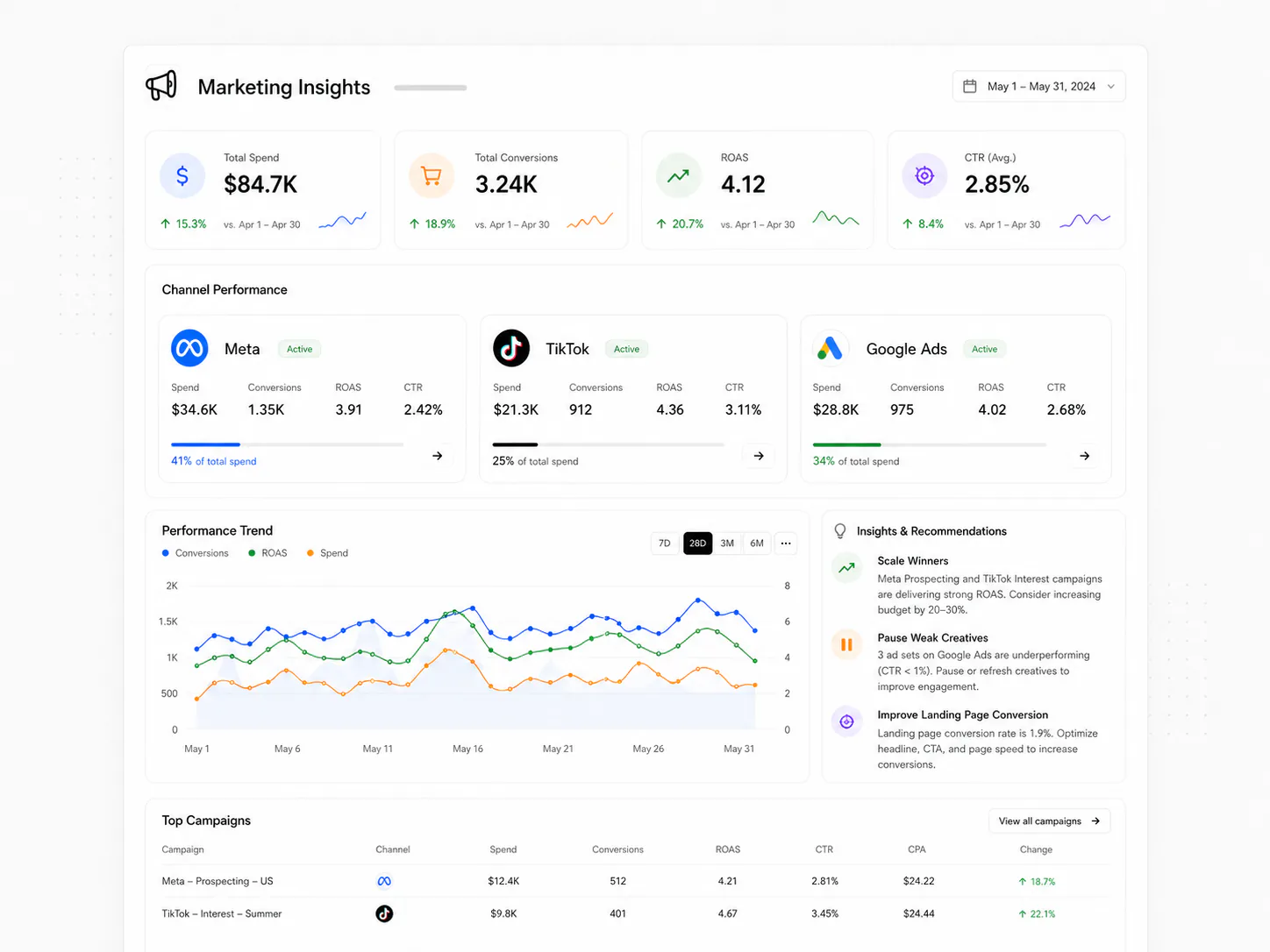
How I approach it
Start with the journey and source data, connect the handoffs between channels and CRM, then automate the recurring work that improves execution and reporting. Common workflows include ad lead capture, lead routing, booking handoffs, nurture suppression, review requests, and weekly performance summaries.
Evidence from real work
The strongest public proof I have here is on the systems side of marketing: preserving source context and making sure interest survives the handoff. In the lead intake case study, website traffic, tracking, calls, forms, alerts, and CRM follow-up are connected as one path. Because client performance data is private, I keep the public claims here to system behavior I can show rather than publishing unverified campaign or ROAS figures.